
Rajdeep IVF
on 6 days ago
Fibroid Uterus: Symptoms, Causes, Diagnosis & Treatment – A Complete Guide
Fibroid Uterus: Symptoms, Causes, Diagnosis & Treatment | Complete Guide
Introduction
A diagnosis of uterine fibroids can be overwhelming, especially if you're planning a pregnancy or experiencing heavy periods and pelvic discomfort. The good news is that fibroids are non-cancerous growths of the uterus, and many women can be treated successfully with the right medical care.
At Rajdeep Fertility Research Centre & IVF Centre, Kota, our experienced gynecologists provide advanced diagnosis and personalized treatment for fibroids while helping women preserve their fertility whenever possible. With over 25 years of experience in women's healthcare, we believe that early diagnosis leads to better outcomes.
What is a Fibroid Uterus?
A uterine fibroid (Leiomyoma or Myoma) is a benign (non-cancerous) tumor that develops from the muscle layer of the uterus.
Fibroids may occur as:
- A single fibroid
- Multiple fibroids
- Small microscopic fibroids
- Large fibroids that significantly enlarge the uterus
Although fibroids are not cancerous, they can affect a woman's quality of life and, in some cases, fertility and pregnancy.
Types of Uterine Fibroids
1. Intramural Fibroids
The most common type, developing within the muscular wall of the uterus.
2. Submucosal Fibroids
Grow inside the uterine cavity and are more likely to cause heavy bleeding and fertility issues.
3. Subserosal Fibroids
Develop on the outer surface of the uterus and may press on nearby organs.
4. Pedunculated Fibroids
Attached to the uterus by a thin stalk and may cause pain if twisted.
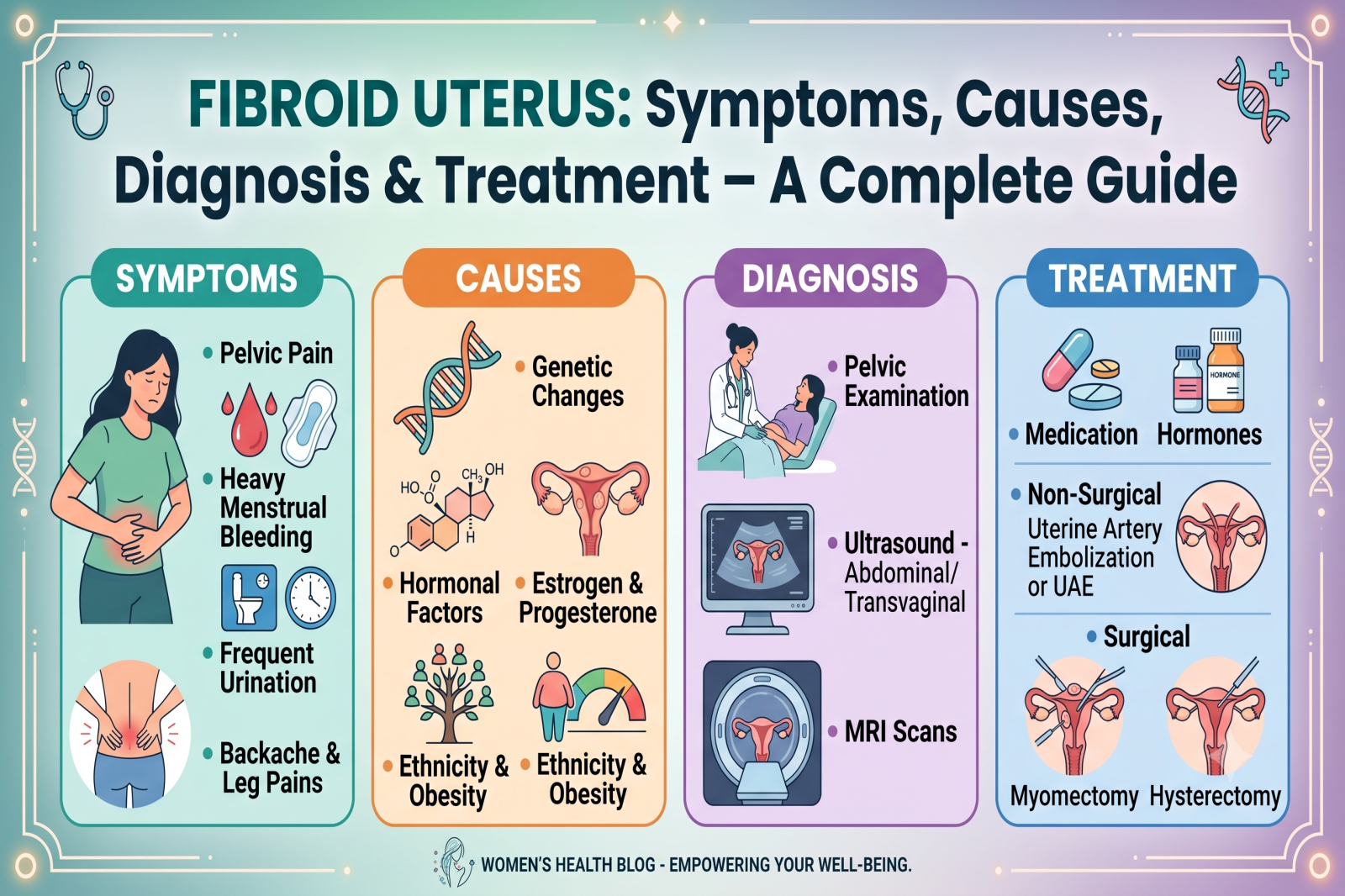
Symptoms of Fibroid Uterus
Many women have fibroids without any symptoms. However, larger or multiple fibroids may cause:
- Heavy menstrual bleeding
- Periods lasting more than 7 days
- Severe menstrual cramps
- Pelvic pain or pressure
- Lower back pain
- Frequent urination
- Constipation
- Pain during intercourse
- Abdominal swelling
- Difficulty getting pregnant
- Recurrent miscarriages
- Fatigue due to anemia caused by heavy bleeding
What Causes Fibroids?
The exact cause is still unknown, but several factors increase the risk.
Hormonal Factors
Estrogen and progesterone promote fibroid growth during reproductive years.
Genetics
Women with a family history of fibroids have a higher risk.
Age
Fibroids are most common between 30 and 50 years of age.
Obesity
Higher body weight is associated with an increased risk.
Early Menstruation
Starting periods at an early age may increase susceptibility.
Lifestyle Factors
Poor diet, lack of exercise, and chronic stress may contribute to fibroid development.
Who is at Higher Risk?
You may have a higher chance of developing fibroids if you:
- Are between 30–50 years old
- Have a family history of fibroids
- Are overweight
- Have high estrogen levels
- Have never been pregnant
- Have vitamin D deficiency
Can Fibroids Affect Fertility?
Yes, depending on their size and location.
Fibroids can:
- Block fallopian tubes
- Distort the uterine cavity
- Prevent embryo implantation
- Increase miscarriage risk
- Cause recurrent IVF failure in selected cases
However, many women with fibroids conceive naturally. A fertility specialist can determine whether treatment is needed before pregnancy or IVF.
Fibroids During Pregnancy
Some women have healthy pregnancies despite fibroids, but complications can include:
- Pain during pregnancy
- Miscarriage
- Placental problems
- Preterm labor
- Breech baby
- Increased likelihood of cesarean delivery
Regular monitoring helps ensure the best possible outcome.
How Are Fibroids Diagnosed?
At Rajdeep Fertility Research Centre & IVF Centre, diagnosis begins with a detailed consultation and pelvic examination.
Investigations may include:
- Ultrasound (USG)
- 3D/4D Ultrasound
- Transvaginal Ultrasound
- MRI (when required)
- Hysteroscopy
- Diagnostic Laparoscopy
- Blood tests (if heavy bleeding causes anemia)
The centre offers advanced 3D ultrasound, hysteroscopy, and laparoscopy facilities to support accurate diagnosis and treatment planning.
Treatment Options for Fibroids
Treatment depends on:
- Age
- Symptoms
- Size of fibroids
- Number of fibroids
- Pregnancy plans
1. Observation
Small fibroids without symptoms may only require regular follow-up.
2. Medications
Medicines may help:
- Reduce heavy bleeding
- Relieve pain
- Shrink fibroids temporarily
- Improve anemia
3. Minimally Invasive Surgery
Recommended for women wishing to preserve fertility.
Hysteroscopic Myomectomy
Removes fibroids inside the uterine cavity without abdominal incisions.
Laparoscopic Myomectomy
Removes fibroids through small keyhole incisions with faster recovery.
Rajdeep Fertility Research Centre has extensive expertise in advanced laparoscopy and hysteroscopy.
4. Open Myomectomy
Used when fibroids are extremely large or numerous.
5. Hysterectomy
Recommended only when childbearing is complete and symptoms are severe.
Can Fibroids Be Prevented?
While complete prevention is not possible, healthy habits may reduce the risk.
- Maintain a healthy weight
- Exercise regularly
- Eat plenty of fruits and vegetables
- Limit processed foods
- Manage stress
- Schedule regular gynecological check-ups
When Should You See a Gynecologist?
Consult a specialist if you experience:
- Very heavy periods
- Severe pelvic pain
- Painful intercourse
- Difficulty conceiving
- Recurrent miscarriages
- Abdominal swelling
- Persistent pressure in the pelvis
- Frequent urination without infection
Early diagnosis can prevent complications and preserve fertility.
Why Choose Rajdeep Fertility Research Centre & IVF Centre, Kota?
At Rajdeep Fertility Research Centre, patients receive compassionate, evidence-based care supported by advanced technology. The centre offers:
- Over 25 years of experience
- Experienced gynecologists and fertility specialists
- Advanced 3D ultrasound
- Hysteroscopy and laparoscopy services
- Personalized treatment plans
- Fertility-preserving surgical options
- Comprehensive women's healthcare under one roof
Frequently Asked Questions (FAQs)
Are fibroids cancerous?
No. More than 99% of uterine fibroids are benign (non-cancerous).
Can fibroids disappear naturally?
Small fibroids may shrink after menopause, but most require monitoring.
Can I get pregnant with fibroids?
Yes. Many women conceive naturally. Whether treatment is needed depends on the fibroid's size and location.
Do all fibroids require surgery?
No. Surgery is recommended only when fibroids cause significant symptoms, fertility problems, or rapid growth.
Can fibroids come back after surgery?
Yes. New fibroids can develop, which is why regular follow-up is important.
Conclusion
Fibroid uterus is a common gynecological condition, but it is highly manageable with timely diagnosis and appropriate treatment. If you're experiencing heavy bleeding, pelvic pain, or difficulty conceiving, don't ignore the symptoms.
At Rajdeep Fertility Research Centre & IVF Centre, Kota, our experienced team is committed to helping women achieve better reproductive health through accurate diagnosis, advanced treatment, and compassionate care.
Book your consultation today and take the first step toward better women's health.
/https://rajdeepfertility.in/
- Male Infertility in kota
- IVF centre Kota
- infertility specialist Kota
- IVF Kota Rajasthan
- Best IVF Centre in Kota
- Infertility Treatment
- IVF Specialist
- Kota First IVF Centre
- Fibroid uterus
- Fibroid symptoms
- Fibroid causes
- Fibroid in pregnancy
- Heavy periods
- Bestgynecologistinkota
- Infertility
- BestGynecologistinKota
- FibroidTreatment
- FibroidSymptoms
- KotaHealthcare
- BestIVFCentreKota
- Firstivfcentreinkota
- Bestgynecologistinkota
- Firstivfcentreinkota
- women'shealth
POST COMMENT
For post a new comment. You need to login first. Login
COMMENTS(0)
No Comment yet. Be the first