


Infertility is a growing concern among couples moment, told by factors similar as life changes, delayed parenting, stress, and underpinning medical conditions. When natural generality is n’t possible, In Vitro Fertilization( IVF) offers a scientifically proven and effective result.
In this blog, Dr. Rajshree Mam, Fertility Specialist at Rajdeep Fertility & IVF Centre, explains the five crucial stages of IVF treatment in a clear, professional, and patient-focused manner to help couples understand the process and make informed opinions.
Overview What Is IVF?
IVF, or In Vitro Fertilization, is an supported reproductive technology in which fertilization occurs outside the mortal body in a controlled laboratory terrain. The performing embryo is also transferred into the uterus to establish gestation.
IVF is generally recommended for couples facing
- Long- term gravidity
- joker or womanish factor gravidity
- Blocked fallopian tubes
- PCOS or ovulation diseases
- Low sperm count or motility issues
- Repeated IUI failures
- Unexplained gravidity
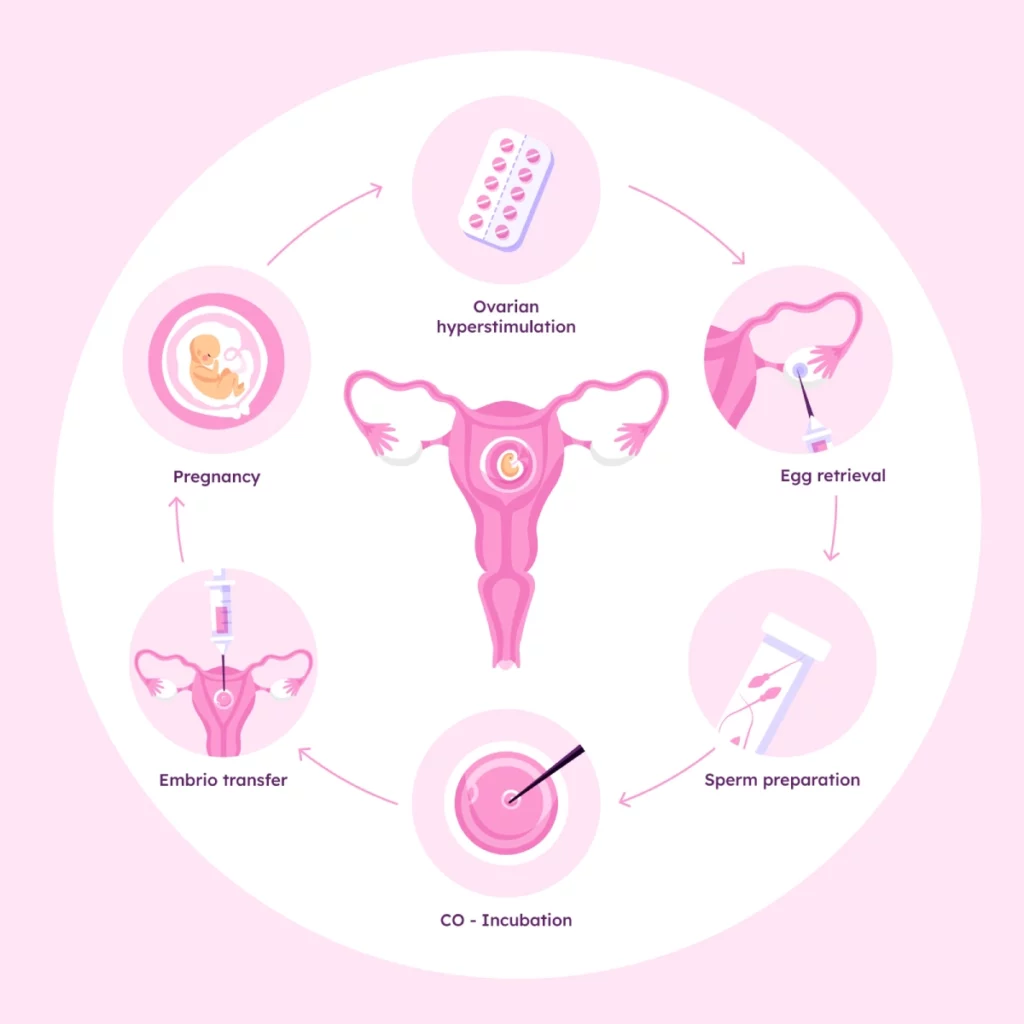
There are 5 Stages of IVF :
Stage 1 Ovarian Stimulation
The first stage of IVF involves ovarian stimulation, aimed at producing multiple mature eggs in a single cycle.
Under normal circumstances, a woman releases one egg per month. During IVF, hormonal specifics are administered to stimulate the ovaries to produce multiple eggs, adding the chances of successful fertilization.
Crucial aspects of this stage include
- Duration of roughly 8 – 12 days
- Precisely covered hormone injections
- Regular ultrasound reviews and blood tests
Rajshree Mam designs personalized stimulation protocols grounded on each case’s age, hormone situations, and ovarian response to insure safety and optimal issues.
Stage 2 Egg Retrieval
Once the eggs reach optimal maturity, the coming step is egg reclamation.
This is a minor, safe medical procedure performed under mild anesthesia. Using ultrasound guidance, mature eggs are collected from the ovaries.
Important points
- Procedure duration 20 – 30 twinkles
- Generally painless with minimal recovery time
- No prolonged hospital stay required
On the same day, a semen sample is collected from the manly mate for fertilization.
Stage 3 Fertilization and Embryo Development
The recaptured eggs and sperms are fertilized in a state- of- the- art IVF laboratory.
Depending on the clinical suggestion, fertilization is achieved through
- Conventional IVF, or
- ICSI( Intracytoplasmic Sperm Injection)
- Advance Grade IV Endometriosis
After fertilization, embryos are cultured and monitored for 3–5 days. Their development, cell division, and quality are carefully assessed, and only the most viable embryos are selected for transfer.
Stage 4 Embryo Transfer
The fourth stage involves transferring the named embryo into the uterus.
This procedure is
- Simple and effortless
- Performed without anesthesia
- Completed within a short duration
Cases can renew normal daily conditioning shortly after the procedure. Emotional well- being and stress operation during this phase play a vital part in treatment success.
Stage 5 Pregnancy Testing and evidence
The final stage of IVF is evidence of Pregnancy
A blood Pregnancy test is conducted 12 – 14 days after embryo transfer. A positive result indicates successful implantation and the morning of Pregnancy care and follow- up.
This waiting period is frequently emotionally sensitive, and professional guidance is essential to support cases during this phase.
Factors Affecting IVF Success
IVF success rates vary from case to case and depend on several factors, including
- Age of the womanish mate
- Egg and sperm quality
- Uterine health
- life habits
- Underpinning medical conditions
- Laboratory norms and clinical moxie
Rajdeep Fertility & IVF Centre combines advanced laboratory technology with substantiation- grounded clinical practices to maximize success rates.
Common myths about IVF
Myth IVF babies aren’t healthy
Fact IVF babies are as healthy as naturally conceived babies
Myth IVF treatment is extremely painful
Fact utmost IVF procedures involve minimum discomfort
Myth IVF is always the last option
Fact In numerous cases, IVF is the most effective first- line treatment
Why Choose Dr. Rajshree Mam at Rajdeep Fertility & IVF Centre?
- expansive experience in fertility and IVF treatments
- Ethical and transparent treatment protocols
- substantiated, patient- centric care
- Advanced IVF and ICSI laboratory installations
- High norms of clinical excellence
Conclusion
IVF is a structured, step- by- step medical process designed to help couples in achieving gestation when natural generality is n’t possible. Understanding the five stages of IVF helps reduce anxiety and builds confidence throughout the treatment trip.
Under the expert guidance of Dr. Rajshree Mam, Rajdeep Fertility & IVF Centre is committed to furnishing compassionate care, clinical perfection, and comprehensive support to couples aspiring to parenting.
Early discussion with a fertility specialist can significantly ameliorate treatment issues.