
Rajdeep IVF
on 2 weeks ago
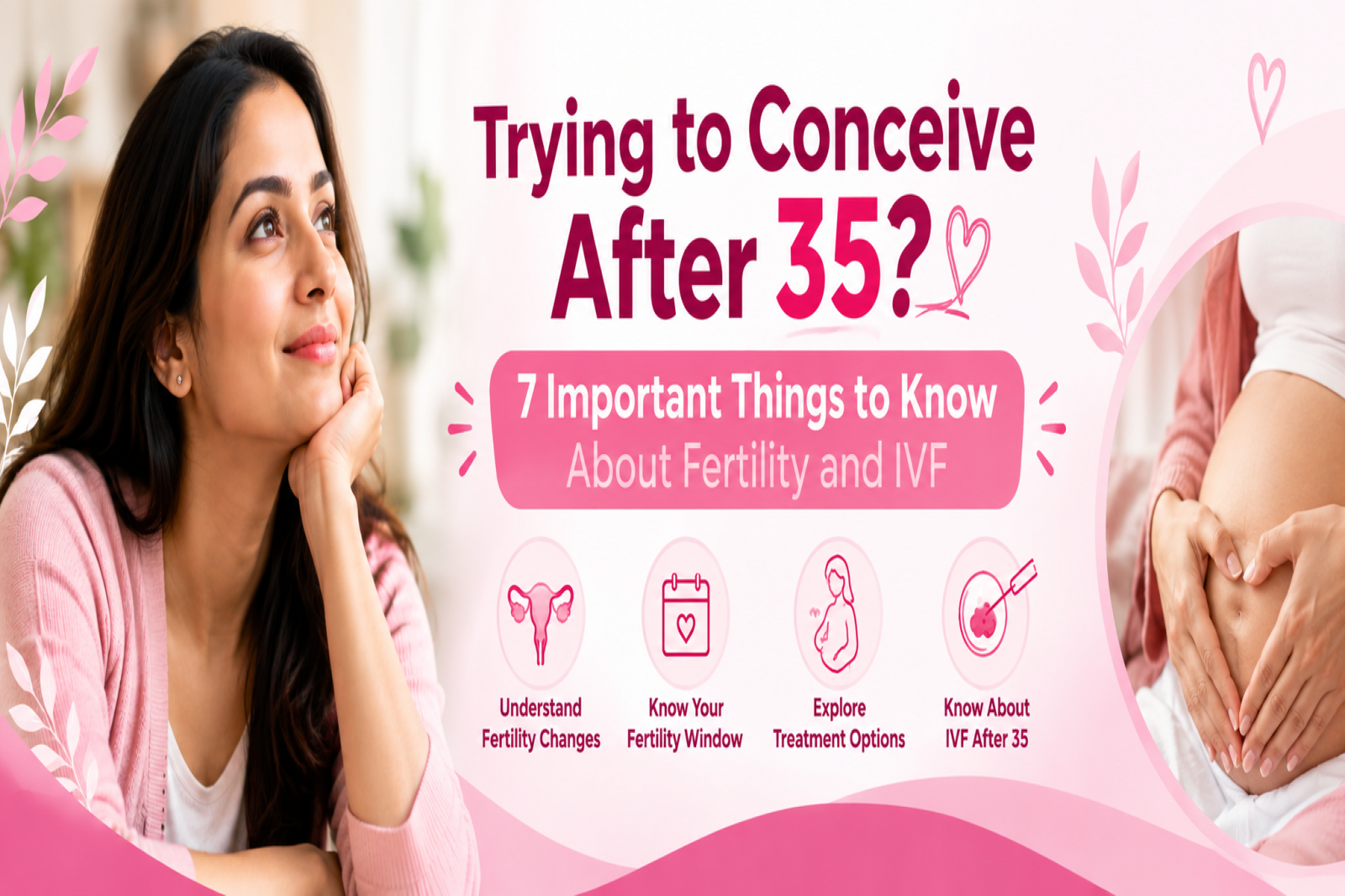
Trying to Conceive After 35? 7 Important Things to Know About Fertility and IVF
Trying to conceive after 35? You are not alone. Many women choose to start a family in their mid-30s or later. While pregnancy after 35 is absolutely possible, understanding age-related fertility changes and seeking timely medical guidance can help you make informed decisions about your reproductive health.
Female fertility gradually declines with age, particularly after the age of 35. This happens mainly because the number and quality of eggs decrease over time. However, every woman's fertility journey is different, and age alone does not determine whether you can become pregnant naturally.
At Rajdeep Fertility Research & IVF Centre in Kota, Rajasthan, women and couples can seek guidance about fertility evaluation, conception planning, and assisted reproductive treatments such as IVF.
Let's explore seven important things to know if you are trying to conceive after 35.
1. Understand How Age Affects Female Fertility
Age is one of the most important factors affecting female fertility. Women are born with a finite number of eggs, and both egg quantity and quality decline over time.
After 35, some women may take longer to conceive. The risk of miscarriage and certain chromosomal abnormalities also increases with maternal age.
However, this does not mean that pregnancy is impossible after 35. Many women have healthy pregnancies in their late 30s and early 40s.
What you should know:
-
Fertility generally declines with age, with a more noticeable change during the mid-to-late 30s.
-
Menstrual cycles may remain regular even when egg quantity has decreased.
-
A fertility assessment can help identify potential challenges and guide your next steps.
If you are planning a pregnancy after 35, understanding your reproductive health early can help you make better-informed decisions.
2. Do Not Delay a Fertility Evaluation
If you are under 35, medical guidance is generally recommended after 12 months of trying to conceive without success. However, if you are 35 or older, consult a fertility specialist after six months of trying without pregnancy.
You should consider seeking medical advice sooner if you have irregular or absent periods, a history of endometriosis, previous pelvic infections, recurrent pregnancy loss, or a known fertility concern.
A fertility evaluation may include:
-
Reviewing your menstrual cycle and medical history.
-
Assessing ovulation.
-
Blood tests, when appropriate, to evaluate reproductive hormones.
-
Ultrasound examination of the uterus and ovaries.
-
Evaluation of the fallopian tubes, when indicated.
-
Semen analysis to assess male fertility.
Important: Fertility challenges can affect either partner or both. Evaluating both partners helps the specialist recommend an appropriate plan rather than focusing only on female fertility.
3. Know Your Fertility Window
Understanding your fertile window can improve your chances of natural conception.
The fertile window is the period of approximately six days ending on the day of ovulation. The highest chances of conception are generally associated with intercourse during the two days before ovulation and on the day of ovulation.
Here are a few practical steps:
-
Track your menstrual cycle.
-
Consider ovulation predictor kits if suitable for you.
-
Have intercourse every one to two days during the fertile window.
-
Seek guidance if your cycles are irregular or ovulation is difficult to identify.
Remember that tracking ovulation can help with timing, but it cannot overcome every cause of infertility. If conception is taking longer than expected, a medical evaluation is important.
4. Healthy Lifestyle Choices Can Support Fertility
Lifestyle does not reverse age-related egg changes, but healthy habits can support general health and prepare your body for pregnancy.
Consider these steps while trying to conceive:
Eat a balanced diet: Include vegetables, fruits, whole grains, protein-rich foods, and healthy fats.
Take folic acid: Most people planning pregnancy are advised to take 400 micrograms of folic acid daily, beginning at least one month before conception. Your doctor may recommend a different dose depending on your medical history.
Maintain a healthy weight: Both underweight and overweight conditions can affect ovulation and pregnancy health.
Avoid smoking and alcohol: Smoking can negatively affect fertility, and avoiding alcohol is recommended when trying to conceive and during pregnancy.
Manage stress and sleep: Regular physical activity, sufficient sleep, and relaxation can support overall well-being.
Review your medications: Discuss prescription medicines, supplements, and existing health conditions with your doctor before pregnancy.
Healthy habits are valuable, but they should complement—not replace—timely fertility care.
5. Understand When IVF May Be an Option
In vitro fertilization (IVF) is an assisted reproductive technology in which eggs are collected from the ovaries and fertilized with sperm in a laboratory. An embryo is then transferred into the uterus.
IVF may be considered in several situations, including:
-
Blocked or damaged fallopian tubes.
-
Certain male-factor fertility problems.
-
Ovulation or other fertility challenges that have not responded to appropriate treatment.
-
Unexplained infertility in selected cases.
-
Age-related fertility concerns, depending on the evaluation and individual circumstances.
-
Situations where other fertility treatments have not been successful.
IVF is not automatically required for every woman over 35. Some women may conceive naturally, while others may benefit from ovulation treatment, intrauterine insemination (IUI), IVF, or another approach.
A fertility specialist can explain the available options, expected benefits, limitations, costs, and potential risks based on your individual assessment.
6. Know What to Expect From IVF After 35
The IVF process varies from person to person, but it commonly involves several stages.
Step 1: Fertility assessment
The specialist reviews your medical history and may recommend ovarian reserve tests, ultrasound, tubal assessment, and semen analysis.
Step 2: Ovarian stimulation
Medications are used to encourage the ovaries to develop multiple follicles. The response is monitored through ultrasound and, when needed, blood tests.
Step 3: Egg retrieval and fertilization
Mature eggs are collected and fertilized with sperm in the laboratory.
Step 4: Embryo development
Embryos are monitored as they develop. The specialist discusses the appropriate transfer plan based on the clinical situation.
Step 5: Embryo transfer and pregnancy testing
An embryo may be transferred to the uterus, followed by a pregnancy test at the recommended time.
Age can influence the number of eggs retrieved, embryo development, and the likelihood of a successful pregnancy. IVF success rates also depend on factors such as ovarian reserve, sperm health, the cause of infertility, embryo quality, and the use of one's own eggs or donor eggs.
There is no single IVF success rate that applies to every woman. Ask your fertility specialist for age-specific, clinic-specific information and a realistic discussion of your individual chances.
7. Choose Timely, Personalized Fertility Care
Every fertility journey is different. The most appropriate treatment depends on your age, reproductive health, medical history, test results, and personal preferences.
When choosing a fertility centre, consider:
-
The experience and qualifications of the fertility team.
-
Access to appropriate diagnostic evaluations.
-
Clear explanations of treatment choices and expected outcomes.
-
Transparent discussions about costs, risks, and limitations.
-
Emotional support and respectful communication throughout treatment.
If you are trying to conceive after 35, an early consultation can help you understand your options and avoid unnecessary delays.
At Rajdeep Fertility Research & IVF Centre, Kota, you can seek professional guidance about fertility concerns, conception planning, and IVF treatment options tailored to your needs.
When Should You See a Fertility Specialist?
Consider booking a consultation if:
-
You are 35 or older and have been trying to conceive for six months.
-
You are over 40 and planning a pregnancy.
-
Your periods are irregular or absent.
-
You have a known reproductive health condition.
-
You have experienced repeated pregnancy losses.
-
Your partner has a known fertility concern.
You do not need to wait for a full year to ask questions or understand your reproductive health.
Final Thoughts
Trying to conceive after 35 can bring questions, uncertainty, and emotional challenges. But age does not tell the whole story. Understanding your fertility, identifying potential concerns early, and exploring suitable treatment options can help you move forward with greater clarity.
Whether you are planning natural conception or considering IVF, the right next step begins with an informed conversation with a qualified fertility specialist.
Looking for fertility guidance in Kota?
Contact Rajdeep Fertility Research & IVF Centre, Kota, Rajasthan, to discuss your fertility concerns and explore appropriate next steps for your family-planning journey.


POST COMMENT
For post a new comment. You need to login first. Login
COMMENTS(0)
No Comment yet. Be the first